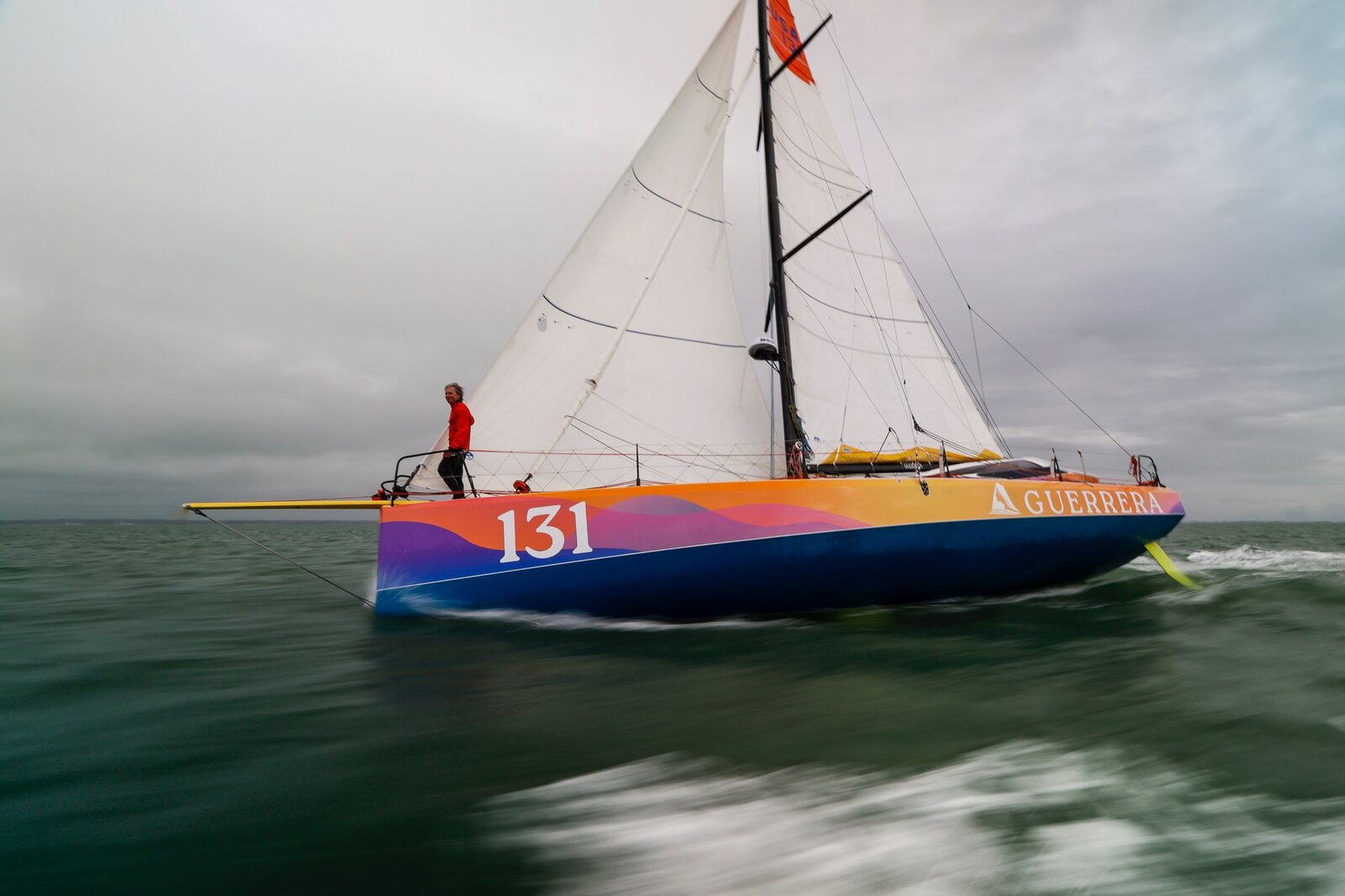
The boat now being readied for a solo, nonstop circumnavigation. Follow her live position below, and the Calendar page for how the preparation is going.
This PredictWind tracker shows current weather and also the previous voyages of Malabar.
Live position via PredictWind. If the map doesn't load, open the full tracking page → or try the YB Tracking view →.
Sailing solo around the world non-stop is, of course, a serious undertaking. Of major import is choosing the right boat and then preparing it and the skipper for the challenge. Rufus has the raw skill sets, the tenacity, drive and long-held ambition, along with the unerring support of his wife Cris. We plan to do over 30,000 training miles, some 10,000 miles of which he will do solo, during the year or so before he sets off on his circumnavigation — the target being that he knows his machine intimately.
This project had numerous standout objectives: choose the right boat; make the required changes for a Category 0 event; increase skipper protection for the cockpit; make the boat easy to sail; create reliability across all systems; upgrade hardware to suit the challenge; ensure redundancy with spares and back-up systems.
The decision was made to purchase an existing Class40 boat and re-purpose it for Rufus. Class40s are naturally fast boats, even sailed conservatively, and have proven structural reliability for round-the-world events. Whilst they are capable of surfing along at 25 knots+, they consistently produce an average ocean-crossing speed of 8.5 knots. In addition, they are inherently safe, with over 100% buoyancy — they are effectively un-sinkable.
A 2013 Akilaria RC3 Class40 was chosen as the platform: a fiberglass/foam sandwich construction, exceptionally well-built at birth. Dry weight around 5,000kg; a 3-metre-deep fin keel with torpedo lead bulb; 4.5-metre beam; twin rudders that can be lifted; carbon mast and boom; a 2-metre-long carbon bowsprit for the larger reaching/downwind sails; and the ability to pump 750 litres of seawater into side tanks to reduce heel and stiffen the boat underway.
Guerrera was purchased in February this year. A five-month-long refit has ensued, and in early August the sailing programme will commence.
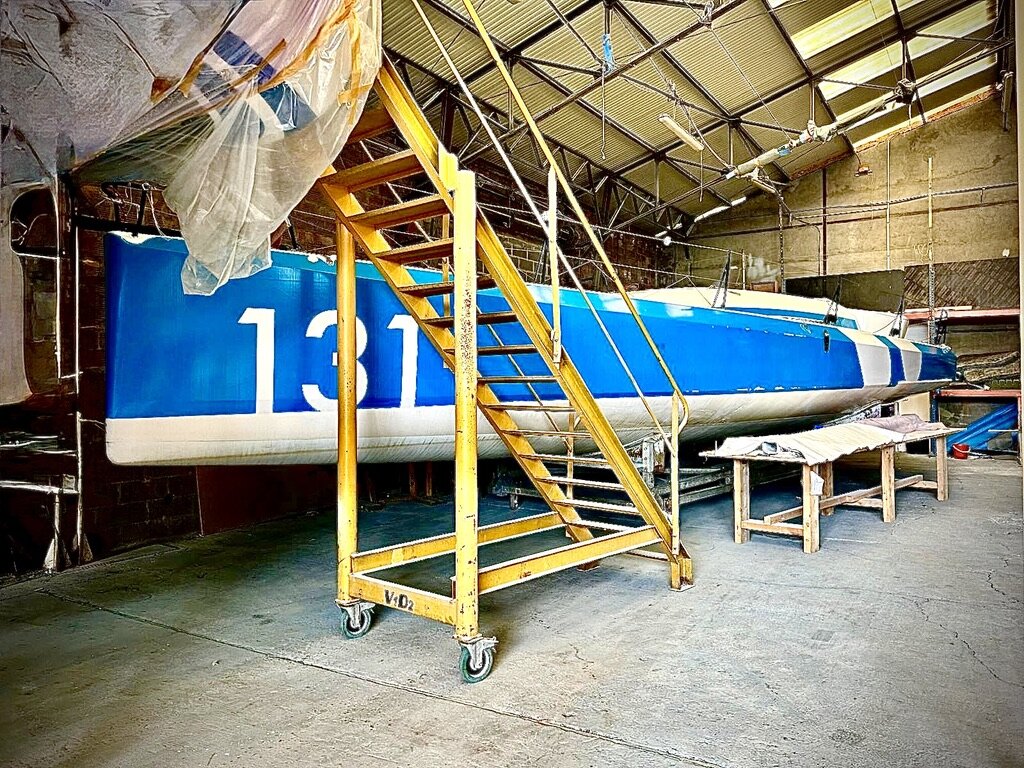
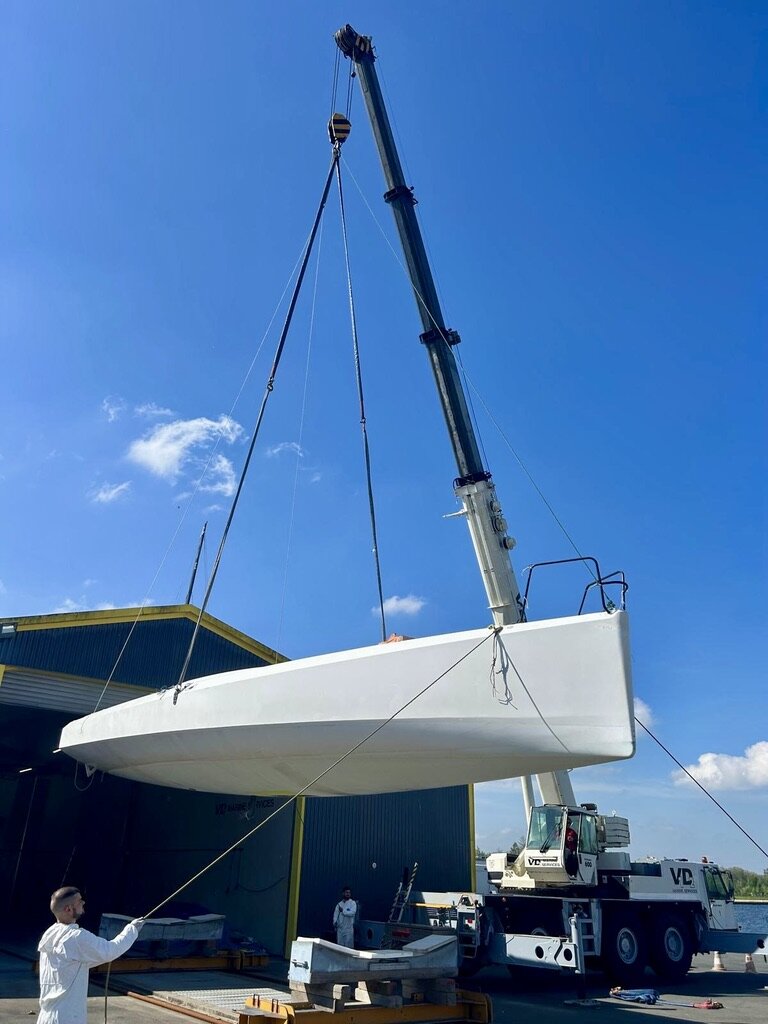
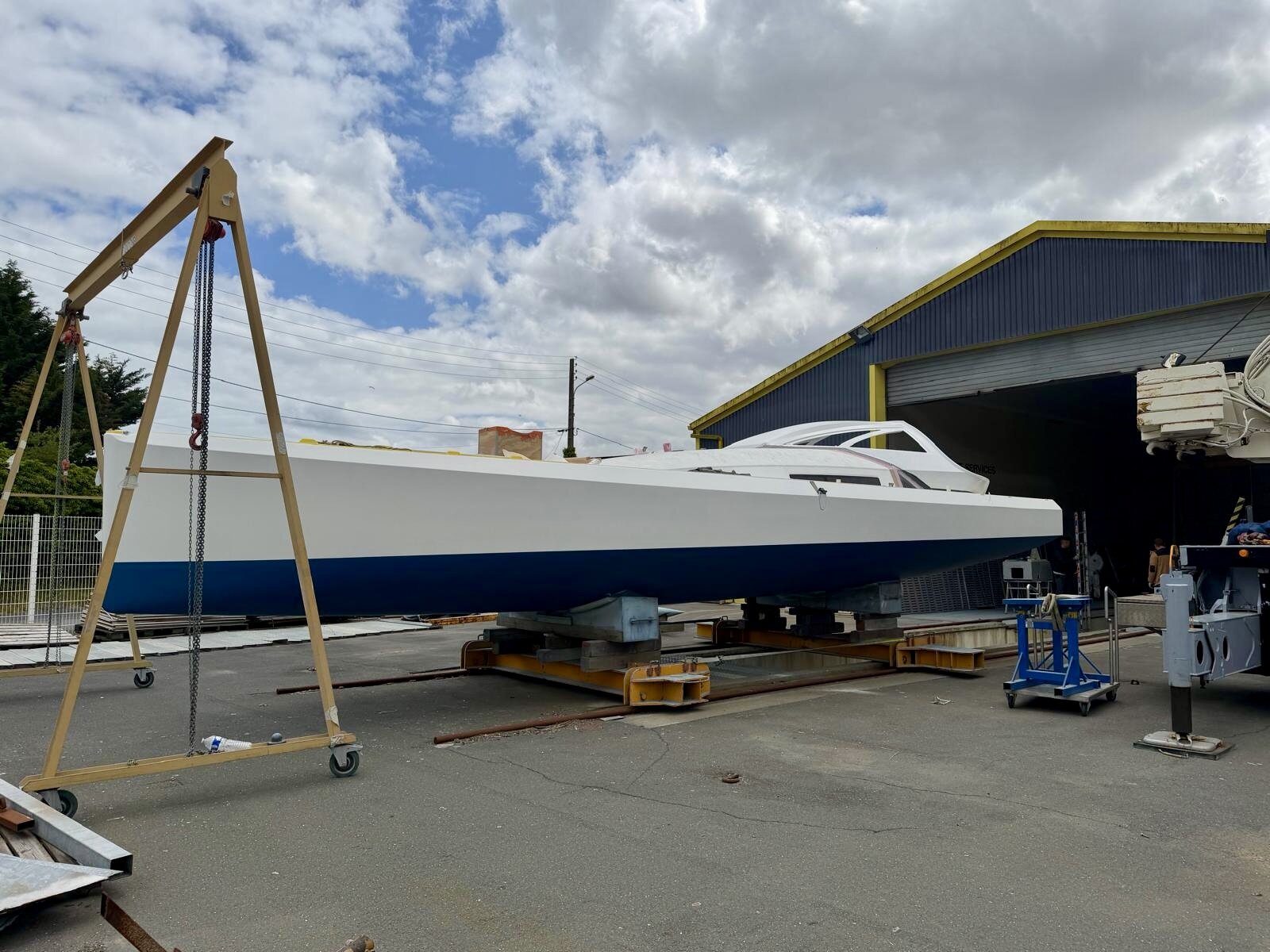
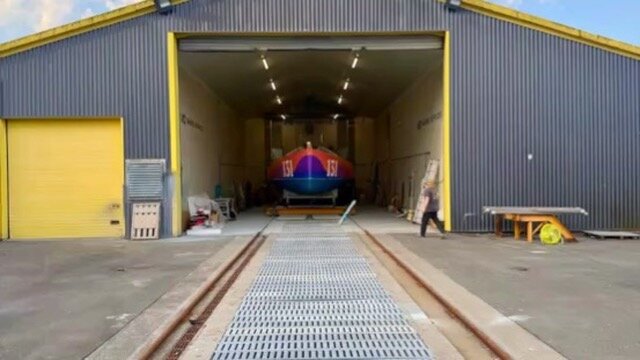
The yard of choice was V1D2 near Caen in Normandy, France — a yard that has executed dozens of refits and builds of Class40s and IMOCA60s for trans-Atlantic and round-the-world campaigns. Their talents and know-how were the perfect fit.
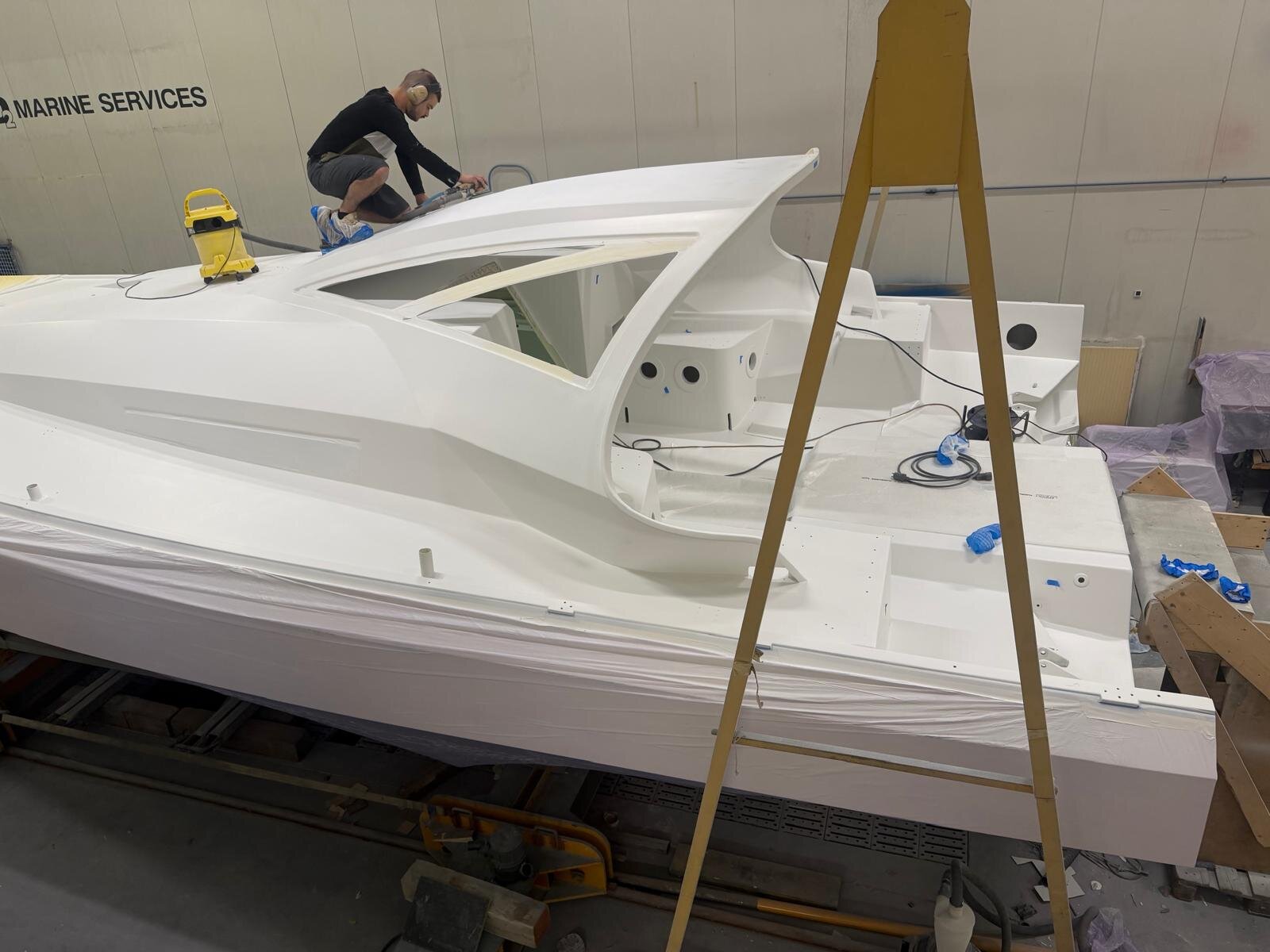
Marc Lombard Design, the boat's original designers, were engaged to design all the structural changes. These included a significantly larger roof over the cockpit for much-enhanced skipper protection; new watertight bulkheads inside to meet Category 0 regulations; and working with the mast makers, Axxon Composites, to change the masthead to carry a fixed backstay. It was decided to have a fixed backstay to replace the running backstays — although this reduces the mainsail area, it means ease of use in tacks/gybes and increases rig security. With swept-back spreaders, fixed forestay and backstay, the rig is inherently secure.
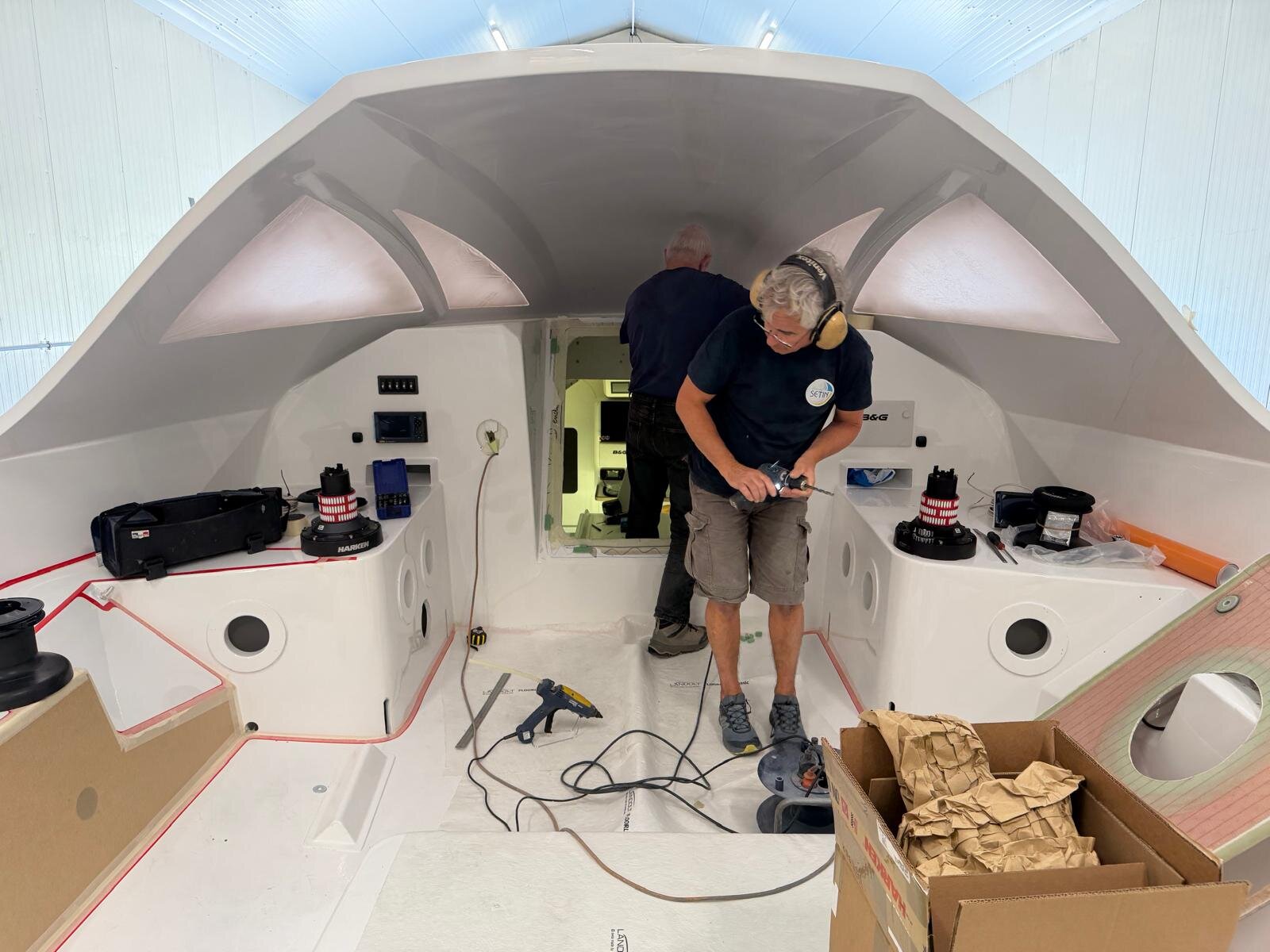
The water ballast system was replaced with one more simple and logical; primary winches upgraded in size; mast and traveller tracks upgraded to the next size; deck hardware moved and renewed; high-load hardware had increased reinforcements to deck; all spars ultra-sounded to ensure no hidden flaws in the carbon.
The steering system was overhauled with many worn parts replaced. The keel was professionally inspected and reinstalled. A Whaleshield was added to the keel bulb — this emits a sonic sound that should disperse whales away from the boat without harming them, effectively a collision-avoidance device.
Teem Electronics from Brittany, France, the world's leading electrical/electronics outfit for long-distance crewed and solo boats, were engaged to replace all the wiring; replace all the electronics; replace the two autopilot systems; replace the two battery banks with lithium; cover the large new roof with solar panels; and install a new hydro generator on the transom, plus a spare. The objective is reliability and plenty of back-ups, and to be autonomous for energy — although the 30HP engine has been fully checked and serviced, with new large-output alternators added as a charging back-up. The masthead carries three wind sensors, interchangeable from below deck to diminish the need for masthead visits by Rufus, and for the circumnavigation a fourth will be added to a "tack-able" pole arrangement at deck level.
Starlink is installed, with Iridium back-ups for comms; a heater installed for the chilly Southern Ocean; a water maker installed with a spare aboard; new manual and electric bilge pumps; and a marine toilet, for obvious reasons.
Inside, a car rally seat has been installed at the nav station — long periods are spent here, so comfort is key. Custom mattresses were made, new stacking netting installed; the weight of spares, food and gear is stacked on the weather side to aid keeping the boat flatter, and it must be held secure.
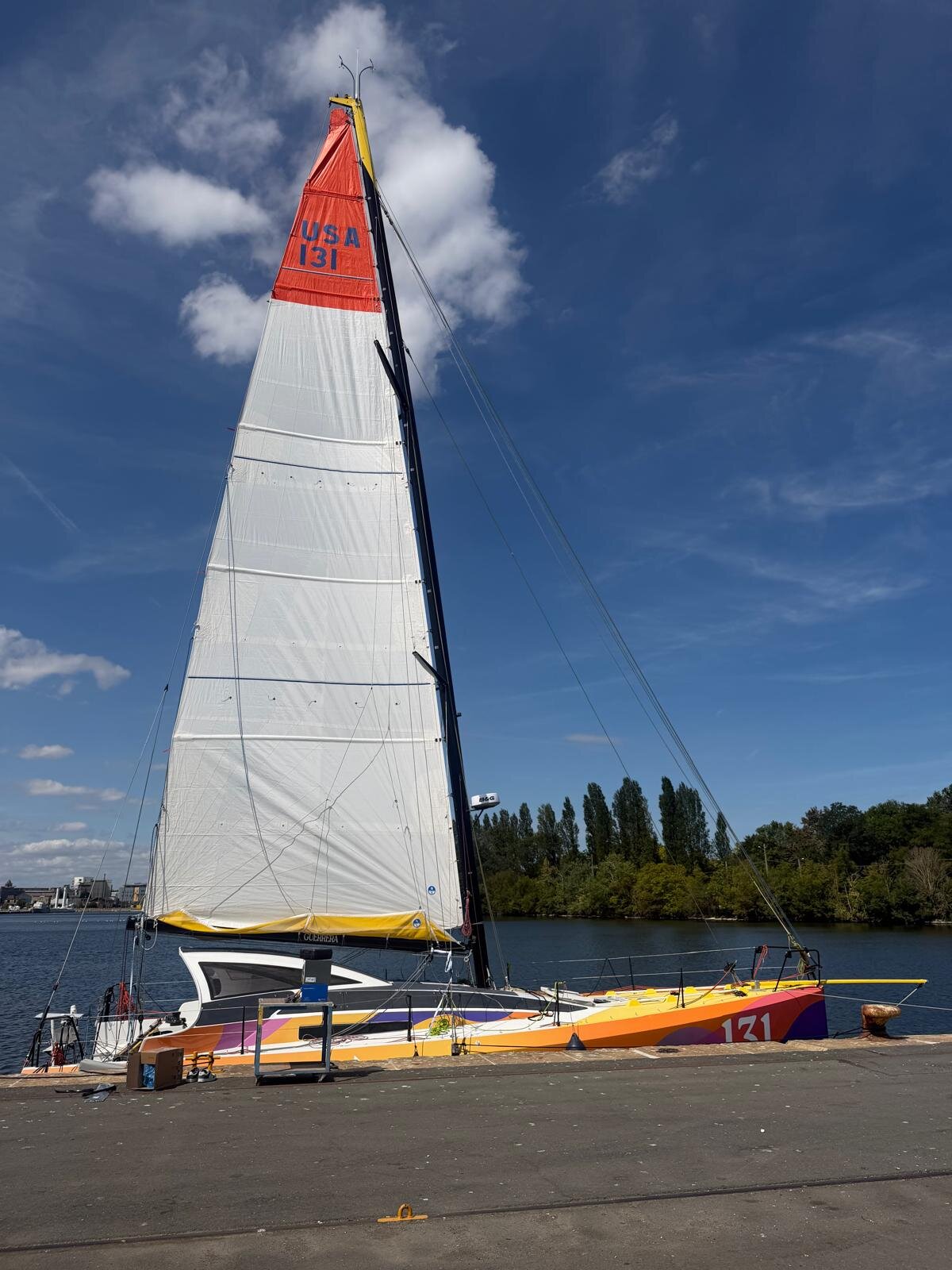
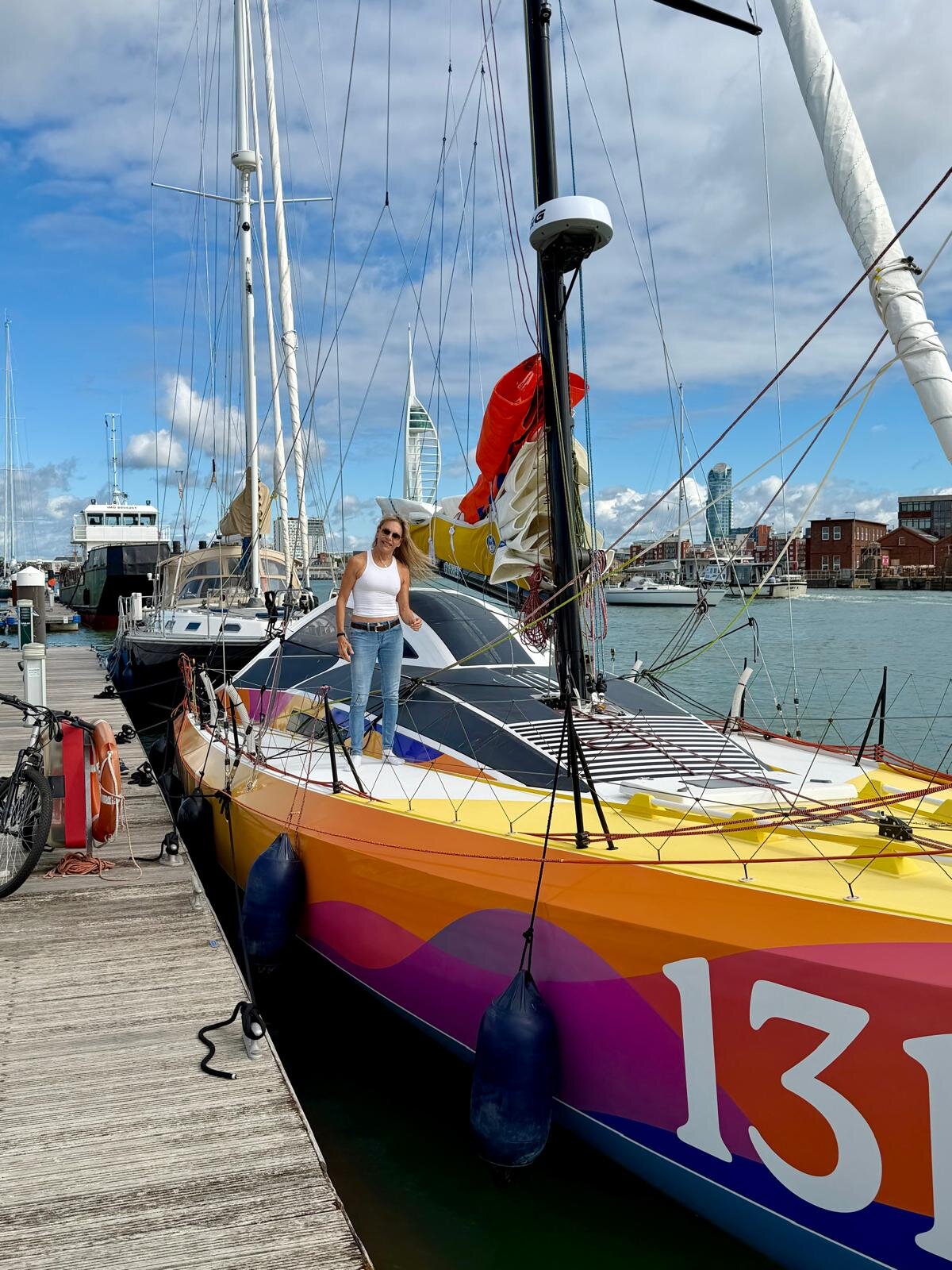
From a high-visibility point of view at sea — for collision avoidance and discovery in case of a rescue — the keel, rudders, 2 square metres of under-hull, 5 square metres of the foredeck, the top section of the mainsail and the top few metres of the mast have been painted bright yellow. The antifoul has been fully renewed on the hull, new nonskid paint applied to the deck, and the entire interior repainted with nonskid on the floor.
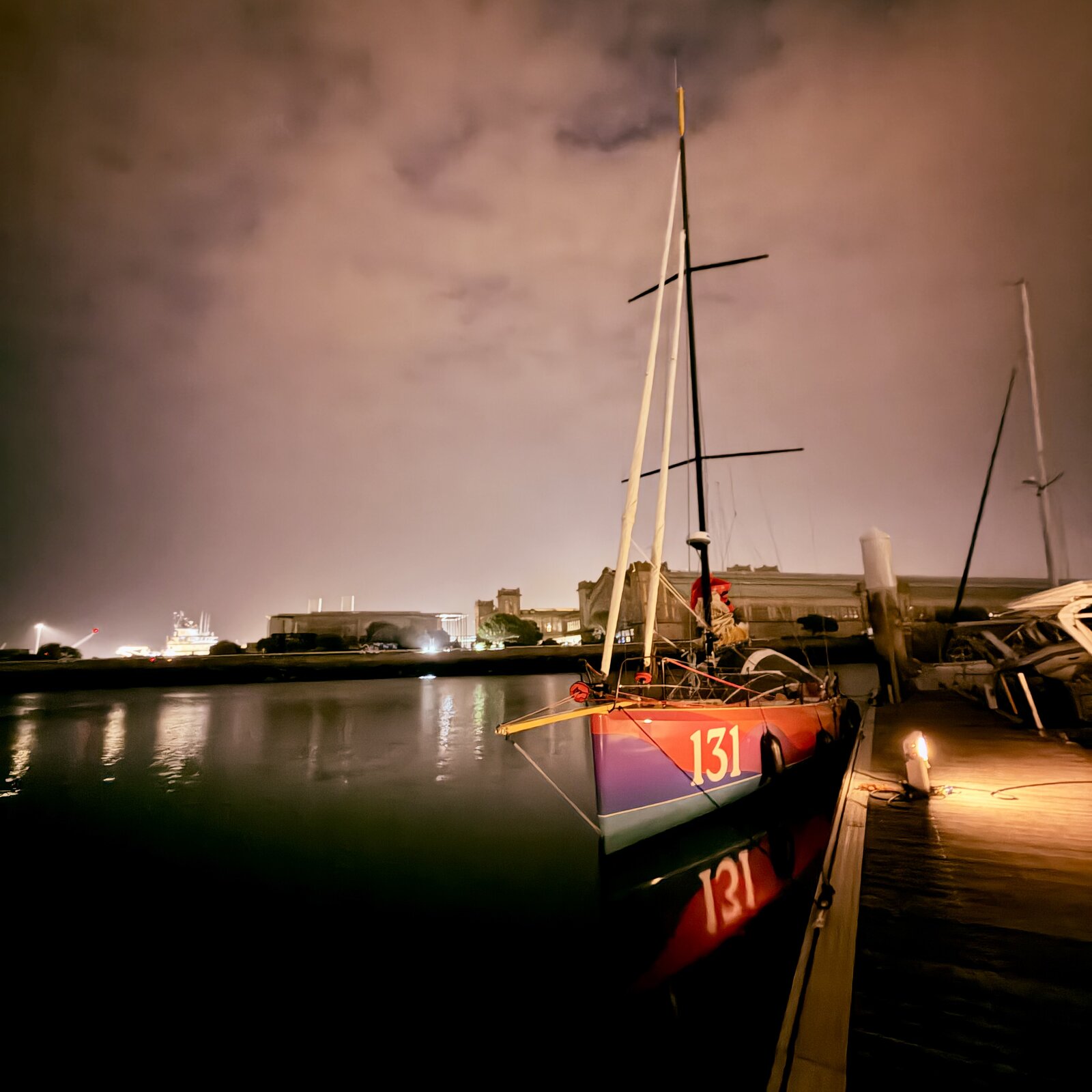
Cris and Rufus chose a stunning graphic for the boat's topsides — a vinyl application installed by Decosail from Brittany, France.
A new suit of sails is coming aboard from North Sails, in a spectra-based material chosen for strength and longevity: a slab-reef mainsail with 4 reefs, 3 different choices of furling headsail (J1 fixed, J2 and J3 interchangeable on a stay-lock), a fractional Code 0 for lighter airs, and a fractional Code 5 for reaching — both furling and set on the bowsprit. A new set of sails is planned for the circumnavigation.
So Guerrera, a re-purposed Class40, is about ready for the sailing programme 2026–27, and she is a stunning reflection of the ambition, drive and taste of Cris and Rufus — amazing, let's go!